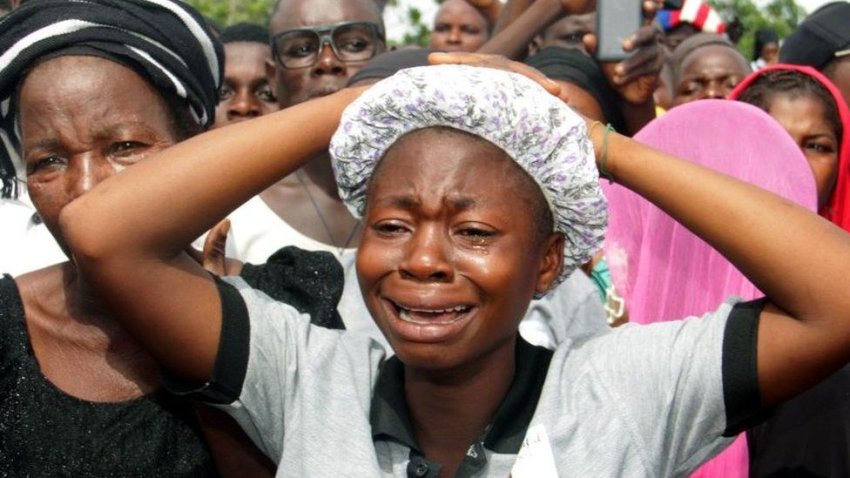
Hundreds of lives have been lost and hundreds of homes have been burned since the start of 2019, raising questions again about the truth behind the violence occurring between Fulani Muslim herdsmen and predominantly Christian farmers in Nigeria’s Middle Belt.
While conflicts between nomadic herdsmen and farmers in the Middle Belt date back decades, there’s been a noticeable increase in deadly massacres across several states in the Middle Belt of Nigeria since January 2018, where people were slaughtered and communities razed.
In addition to the seemingly countless numbers of people killed, it has been estimated that as many as 300,000 people have been displaced from their homes by the communal violence.
What’s happening in the Middle Belt of Nigeria can be confusing for onlookers outside the country because of the fact that there are competing narratives.
One narrative labels the Fulani attacks against Christian farmers a “genocide” perpetrated by radicalized Islamic herders looking to drive out Christians from their homes.
A second narrative paints the killings as being part of a years-old conflict exacerbated by several factors, including increased Fulani herdsmen migration due to the Boko Haram insurgency and the desertification in the north.
In the following pages are five key facts you need to know about the Fulani conflict in Nigeria.
1. What’s at the root of the crisis?
What’s at the root of the Fulani Muslim herders versus Christians conflict can vary depending on who is asked.
According to prominent human rights watchdog group Human Rights Watch, the violence is increasingly described in "religious terms" (Muslim Fulani extremists vs. Christian farmers) but the organization stresses that “competing claims to land and other resources are at its core."
Fulani are an ethnic group of over 20 million in West and Central Africa. According to the Global Terror Index, only a small subset of Fulani herders (extremists) engage in attacks. Herders have been known to travel hundreds of miles while carrying weapons to protect their livestock.
But over the last several years there has been an increase in Fulani from the north migrating to the Middle Belt, which is where predominantly Christian communities farm. As a result, some cattle have destroyed crops and angered farmers.
2. How many have died?
Although estimates have varied, one thing is certain about the Fulani-farmer conflict in Nigeria: there was a noticeable spike in the number of killings in 2018.
As the Global Terrorism Index from 2017 notes, Fulani extremists killed about 2,827 people between the years of 2010 and 2016 in 450 separate incidences in Nigeria.
Human Rights Watch estimates through monitoring of credible media that at least 1,600 were killed on both sides of the conflict in 2018.
The Nigeria-based advocacy and research NGO International Society for Civil Liberties & the Rule of Law (Intersociety) estimates that no less than 2,400 Christian farming community members were killed by Fulani extremists in 2018.
Src: CP



![Featuring Chryso, Israel Mbonyi, James & Daniella and others released a song titled 'Rwanda Shima Imana' [Turaje]](http://paradise.rw/local/cache-vignettes/L350xH197/whatsapp_image_2024-09-23_at_15.26_06_15e47f5f-2-82837.jpg)