Across the globe, throughout history, certain religious figures have risen to prominence, shaping the beliefs and practices of billions. These figures are revered not only as prophets, teachers, or spiritual guides, but often as divine beings themselves.
Whether regarded as gods or as divinely chosen individuals, these figures have become the cornerstones of some of the world’s largest and most influential faiths. In this article,Paradise explores the top 10 most globally recognized divine figures, whose legacies continue to impact millions of lives, guide spiritual practices, and shape human history.
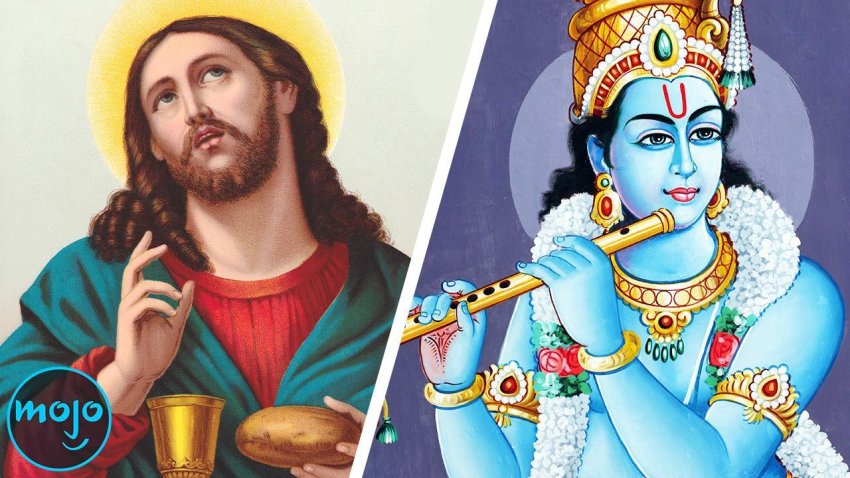
1. Jesus Christ – Central Figure of Christianity
Who He Is:
Jesus of Nazareth, also known as Jesus Christ, is the most significant figure in Christianity, regarded by Christians as the Son of God and the Savior of humanity. His teachings, crucifixion, and resurrection form the foundation of Christian belief.
Divine Significance:
Christians believe Jesus is the Son of God, part of the Holy Trinity (Father, Son, and Holy Spirit), and the Messiah promised in the Old Testament. His death and resurrection are believed to have atoned for the sins of humanity, offering eternal life to those who believe in him.
Impact:
Jesus’ influence is profound, forming the foundation for Western civilization, shaping ethical teachings, social justice movements, and even the arts. His message of love, forgiveness, and salvation has reached billions of people worldwide.
Key Teachings:
• Love your neighbor as yourself.
• The Kingdom of God is within you.
• Salvation is through faith in Jesus Christ.
2. Muhammad – Prophet of Islam
Who He Is:
Muhammad is considered the final prophet in Islam, believed by Muslims to be the last in a line of prophets sent by Allah (God) to guide humanity. He was born in Mecca, Saudi Arabia, in 570 CE, and his revelations, which were given to him by Allah, are recorded in the Qur’an.
Divine Significance:
While Muhammad is not considered divine in Islam, he is regarded as the Messenger of God and is seen as the perfect example of how to live a righteous life. Muslims view him as a man who conveyed God’s message to humanity with perfect clarity and truth.
Impact:
Muhammad’s teachings transformed the Arabian Peninsula and led to the rise of Islam, a religion that now has over 1.8 billion followers globally. His influence extends to law, ethics, and even political governance.
Key Teachings:
• The Oneness of God (Tawhid): Allah is the only God.
• Prayer (Salah), fasting (Sawm), almsgiving (Zakat), and pilgrimage (Hajj) are the five pillars of Islam.
• Peace and submission to the will of Allah are central to a Muslim’s life.
3. Siddhartha Gautama (Buddha) – Founder of Buddhism
Who He Is:
Siddhartha Gautama, known as Buddha, is the founder of Buddhism. Born in Nepal around 563 BCE, he is regarded as the enlightened one who attained nirvana, or liberation from suffering, through meditation, ethical living, and wisdom.
Divine Significance:
Buddha is not considered a god in the traditional sense, but he is revered as the enlightened teacher who showed others the path to end suffering. In various forms of Buddhism, there are different views on the nature of Buddha, but he is universally respected as an awakened being.
Impact:
Buddhism has become one of the major world religions, influencing not only spirituality but also culture, art, and philosophy, especially in Asia. It has over half a billion followers.
Key Teachings:
• The Four Noble Truths: Life is suffering; suffering is caused by desire; suffering can end; and the path to ending suffering is the Eightfold Path.
• Non-attachment, mindfulness, and compassion are central practices.
4. Haile Selassie I – Key Figure in Rastafari Movement
Who He Is:
Haile Selassie I was the last emperor of Ethiopia, reigning from 1930 to 1974. In the Rastafari movement, Selassie is regarded as the living God and the Messiah who fulfilled biblical prophecy.
Divine Significance:
Rastafarians believe Haile Selassie is the incarnation of God (referred to as Jah) and that he represents the return of the King of Kings foretold in the Bible. His leadership in Ethiopia and his emphasis on African pride and independence cemented his divine status in Rastafari belief.
Impact:
Haile Selassie’s influence on Afrocentricity and Black liberation movements is profound. His legacy continues to inspire people around the world, especially in Africa and the African diaspora.
Key Teachings:
• Self-reliance and unity of African nations.
• A deep reverence for Jah and the sacredness of all life.
5. Krishna – God in Hinduism
Who He Is:
Krishna is one of the most widely revered deities in Hinduism. He is considered the eighth avatar of Vishnu and is particularly famous for his role in the Bhagavad Gita, where he advises the warrior Arjuna on duty and righteousness.
Divine Significance:
Krishna is seen as a supreme being in many traditions of Hinduism, representing love, divine wisdom, and compassion. He is often depicted as a playful and loving god, who engages with his devotees through song, dance, and stories.
Impact:
Krishna’s teachings in the Bhagavad Gita have had a lasting impact on philosophy, spirituality, and Indian culture. Devotees across the world worship him as a god of divine love and personal connection.
Key Teachings:
• Bhakti (devotion) is the highest form of worship.
• One should act according to dharma (righteousness), without attachment to the results.
6. Moses – Prophet and Lawgiver of Judaism
Who He Is:
Moses is a key figure in Judaism, regarded as the greatest prophet and lawgiver. He led the Israelites out of slavery in Egypt and received the Torah (the first five books of the Hebrew Bible) from God.
Divine Significance:
Moses is not considered divine, but he is the chosen servant of God who conveyed God’s laws and commandments to the people of Israel. His relationship with God and role in founding the Jewish faith are central to Jewish identity.
Impact:
Moses’ teachings form the basis of Jewish law, ethics, and identity. His influence also extends to Christianity and Islam, where he is regarded as a prophet.
Key Teachings:
• The Ten Commandments, which form the moral foundation of Judaism.
• Monotheism: There is only one God.
7. Zoroaster (Zarathustra) – Founder of Zoroastrianism
Who He Is:
Zoroaster (or Zarathustra) was the founder of Zoroastrianism, one of the world’s oldest monotheistic religions. He lived in Persia (modern-day Iran) around the 6th century BCE and taught that the world is a battleground between good and evil.
Divine Significance:
Zoroaster is considered a prophet who received divine revelation from Ahura Mazda, the supreme god. His teachings focused on moral dualism (good vs. evil) and the importance of individual responsibility.
Impact:
Zoroastrianism influenced many later religions, including Judaism, Christianity, and Islam, particularly in ideas such as heaven and hell, the judgment of souls, and the Messiah.
Key Teachings:
• Good thoughts, good words, good deeds.
• The struggle between Ahura Mazda (the good god) and Angra Mainyu (the evil spirit).
8. Laozi (Lao Tzu) – Father of Taoism
Who He Is:
Laozi (also spelled Lao Tzu) is a legendary figure in Chinese philosophy and the founder of Taoism. His teachings are recorded in the text Tao Te Ching, which advocates living in harmony with the Tao, or the natural flow of the universe.
Divine Significance:
Laozi is not seen as a god in
the traditional sense but as a wise teacher who uncovered the secret of the Tao. In some Taoist traditions, Laozi is revered as a god, and his teachings are considered divine.
Impact:
Laozi’s ideas have profoundly influenced Chinese culture, as well as the development of Taoism and Chinese medicine. His teachings on non-action and living in harmony with nature have inspired many philosophical and spiritual movements worldwide.
Key Teachings:
• Wu wei: Action through non-action, or letting things flow naturally.
• Live simply, in harmony with the Tao.
9. Guru Nanak – Founder of Sikhism
Who He Is:
Guru Nanak was the first of the Ten Sikh Gurus and the founder of Sikhism. Born in 1469 in what is now Pakistan, Guru Nanak sought to bridge the divide between Hindus and Muslims, emphasizing devotion to one God.
Divine Significance:
Guru Nanak is revered as the divine teacher who established the principles of Sikhism, focusing on the oneness of God, equality, and service to humanity.
Impact:
Sikhism has grown into one of the world’s major religions, with a significant following in India and the diaspora.
Key Teachings:
• There is only One God.
• Equality of all people, regardless of religion, caste, or gender.
10. Saint Paul – Apostle of Christianity
Who He Is:
Saint Paul (formerly Saul of Tarsus) was an early Christian missionary and theologian who played a key role in spreading Christianity throughout the Roman Empire. His epistles (letters) form a significant part of the New Testament.
Divine Significance:
Paul is not considered divine but is regarded as one of the most influential figures in early Christianity, shaping Christian doctrine and practices.
Impact:
Paul’s teachings on salvation, faith, grace, and the Christian church have left a lasting impact on Christian theology.
Key Teachings:
• Salvation is through faith in Christ.
• Love and grace are central to the Christian faith.
These 10 divine figures have shaped the beliefs and practices of billions around the world. Whether as gods, prophets, or divinely inspired teachers, each of these figures has had an enduring impact on global religious, spiritual, and philosophical traditions. Their teachings continue to inspire individuals and communities, and their legacies are foundational to the religions they represent.